The future of trade shows, post-pandemic. Will trade shows become events?
We asked ourselves whether the trade show could become an event.
The trade show sector is undergoing major changes, some inherent in the system, others imposed by external circumstances that are often neither controllable nor predictable. How will the future evolve? As we continue the battle against the COVID-19 pandemic, we realize that many behaviors will need to become ingrained habits: there will be no “end of pandemic” in the traditional sense (which would allow us to erase everything that has happened in recent months), but an adaptation of different industries to the virus will be necessary.
New behaviors and new habits are becoming part of our lives: the trends that have emerged due to the health emergency will change the way we live and do business.
Let’s capture the current situation of trade shows in terms of events.
Today, as we well know, trade shows are completely in lockdown. Is it possible to foresee a restart?
It’s possible to think that some sectors, which strictly need to “do trade shows,” may push the accelerator on the trade show world. By trade show world we mean the organizing bodies and the managers of trade show pavilions.
We certainly believe it’s plausible that the reopening of trade shows (in the strict sense of the term) will happen, and very soon.
This will happen gradually, with all precautions, sector by sector. Starting from local and territorial trade shows, with controlled and limited access, and then gradually provincial, regional trade shows, and finally national and international exhibitions.
From September to the end of 2021, this will be the trend.
But what about international trade shows? Is it possible to think that visitors will actually attend the trade show? Take a plane from far away and come to visit a trade show in Europe?
We’ve asked ourselves this question many times, and we’ve come to a very plausible and simple answer: yes, if and only if the trade show truly serves the company’s business.
So, let’s eliminate the almost useless image trips, eliminate the trade shows where “you have to be present by force, but they lead to nothing.” We arrive at trade shows where you truly participate to do business.
Pre-pandemic trade shows as horizontal containers during an event
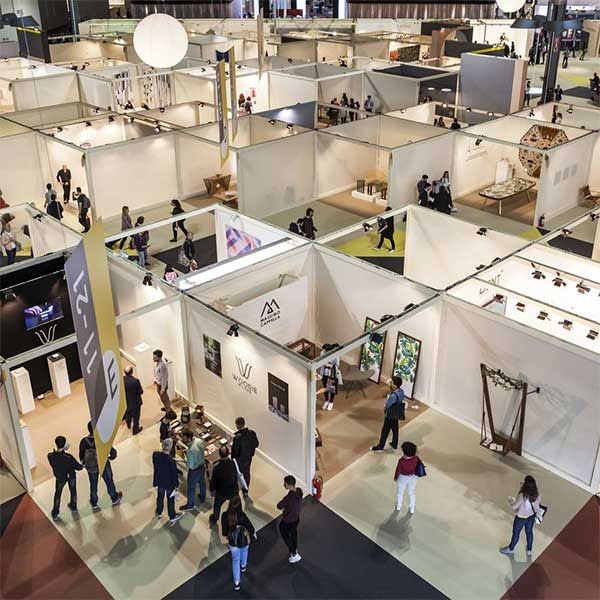
Once upon a time there was the trade show as a container of everything and nothing. Do you remember? The organizing body’s goal was to make numbers and numbers, only numbers.
High numbers and access by any means, even bringing entire school groups on field trips; or continuing to add pavilions almost always half empty with everything that goes around them.
For years we’ve seen trade shows where it was unclear what products absolutely unrelated to the trade show itself had to do with it, and participated in trade shows where those passing in front of the booth were users intent on taking a walk, with no business objective or interest in the category of products displayed.
We believe that this way of doing trade shows certainly does not represent the future of this important and vital sector for companies.
What ideas and hypotheses then?
Trade shows as vertical containers of events
We ask you entrepreneurs, who have personally suffered losses of time and money with participation in trade shows, whom we’ve often heard say that you would never participate in a trade show again.
Better to do a trade show with few booths (in numerical terms), of a single well-defined product sector, few absolute visitors 100% interested, or participate in a trade show where you need a map to find yourself, with a continuous flow of visitors clearly not interested in anything or little?
Some experiences we’ve had that we’re sure will remain only a memory.
At the international plumbing trade show we saw hundreds of organized buses of plumbers. But a plumber does not represent a possible direct customer for an industrial company that produces components for this sector. He’s only an installer of products that are usually recommended to him by a distribution network in the territory.
Today if you want to leverage the installer, there are a thousand ways and solutions. For example, discount policies and loyalty relationships managed by distributors.
The solution is not to have him walk among thousands of booths, placed there to fill spaces, to make numbers that will be flaunted to you when purchasing the trade show space.
An example:
If you have a company of products for lifting and goods handling, it’s enough to say that you’re related to the plumbing sector, for any reason, that the organizing body will surely find you a position. We’ve seen companies that had nothing to do with it participate in trade shows of any kind.
The reason is clear and simple. Participating in a trade show always brings home contacts. And companies live on contacts that can then turn into contracts.
We all agree, but who pays for this horizontal system of doing trade shows are the companies in the relevant sector, those with the strongest brand, those able to move buyers.
Have you ever wondered if the Big players didn’t participate? Would the trade show have the same appeal?
Would it remain an important event or would it be limited to showcases and then miserably close its doors?
A strong example is the Turin Auto Show. It was enough that the Volkswagen Group did not renew its participation that there was a chain of non-renewals, and the definitive closure of the event. One “non-participation” was enough for that trade show to transform into a Fiat exhibition hall.
So, without claiming to teach those who organize trade shows the correct modus operandi, we want to give ideas and advice to restart the entire sector.
Some ideas for trade show events:
- The cost of participation based on the importance and reputation of the brand. Let’s be clear, you participate in a trade show because there’s the sector leader who drives it, otherwise the trade show wouldn’t have the same appeal.
- A single product sector and not thousands as seen for years. Booths of companies strictly connected to the product sector of interest:
- Duration of 1 or maximum 2 days to contain costs and increase the level of business. Moving from the current 7 days to set up, 5 to exhibit and 3 to dismantle to the more current half day to set up, 2 to exhibit and half day to dismantle.
- Booths with fixed size and not variable, so as to concentrate attention on the product to be displayed and not on the aesthetic quality of the booth. In fact, if you want to do branding we believe that the trade show is not the right place, the operations will have to be others, more profitable and less expensive.
- Less travel and more on the territory. We think it’s utopian that operators from all over Italy will be present at a trade show in Milan. Better management with at least 3 locations in the territory, divided by geographical areas North, Center and South.
The consequence?
We’ll have to organize ourselves, we’ll have to become more flexible, smarter, less elephantine.
There will be more trade shows and events, divided by product sector and geographical areas. Few products will be exhibited, vertical and relevant, there will be fewer people at the booth and fewer visitors, but all super interested and relevant to the product category displayed.
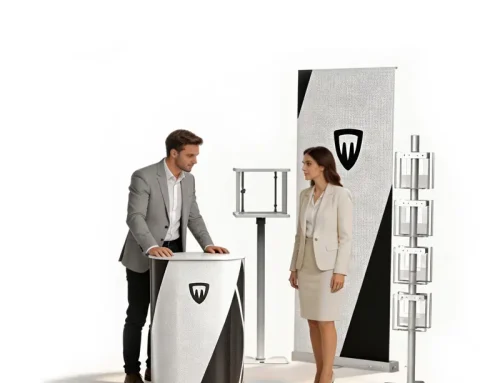
This verticalization will lead to a complete revolution of trade shows with an increase in organization also on the part of participating companies that will have to equip themselves with modular, flexible materials, suitable for any situation and at any time.
The American trade show: a possible scenario?
So thinking of a vertical trade show divided by sector, lasting perhaps only one day, in small spaces, in reduced and limited numbers, in conference centers rather than in dusty trade show warehouses, with a limited number of participants perhaps only by direct call and invitation?
We believe that the path to follow is precisely this and the evolution of doing trade shows will have multiple facets and opportunities in the coming years.
The most logical consequence is that we will witness the birth of thousands of events with different characteristics and targets, distributed throughout the territory.
- Vertical trade shows by targeted and precise product sector
- Traveling road shows with scheduled stops in the territory with the trade show divided by topic and product category
- Local trade shows for citizens, where to do recruiting, territorial branding and training
- Events in conference contexts, where a dedicated conference will be the backdrop to the booths
- Promotion during sporting events
Trade shows will restart with many more opportunities than before. We’re certain of it.
Solutions and ideas to face the future
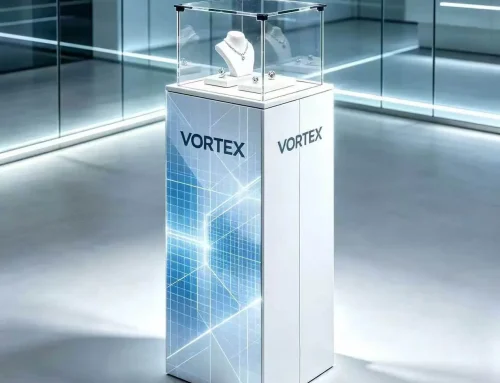
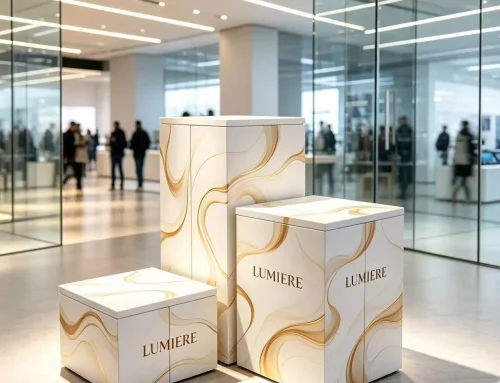
Modularity is essential to face all types of spaces that are assigned from time to time by the trade show organization.
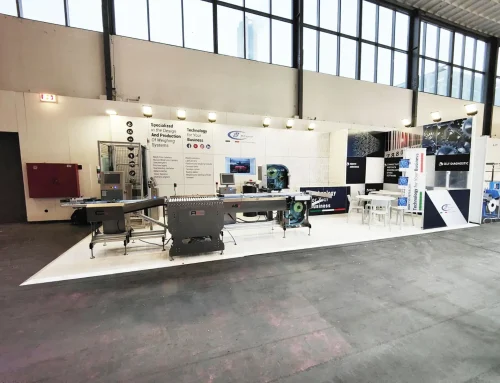
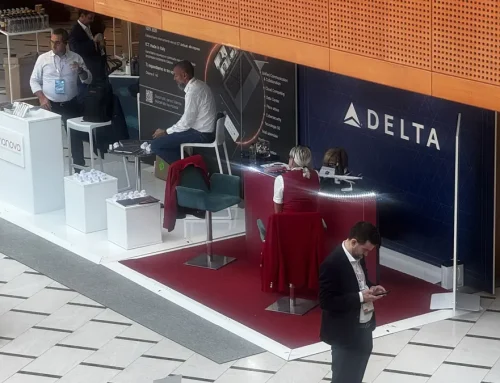
Among these we point out Fastand, a company from Brescia, specialized precisely in the composition of trade show booth kits.
Fastand offers a wide production range of accessories and solutions to participate in both trade show and conference events with standard and custom solutions. For more information visit some examples of trade show and event booths.