Will the trade fair become a congress?
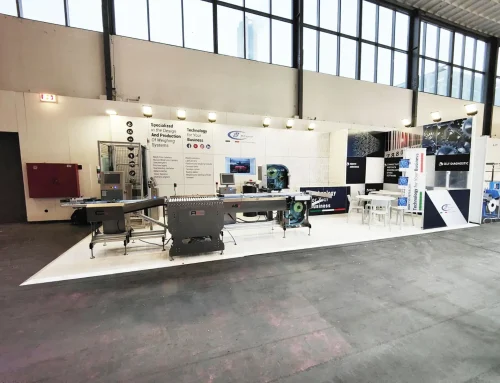
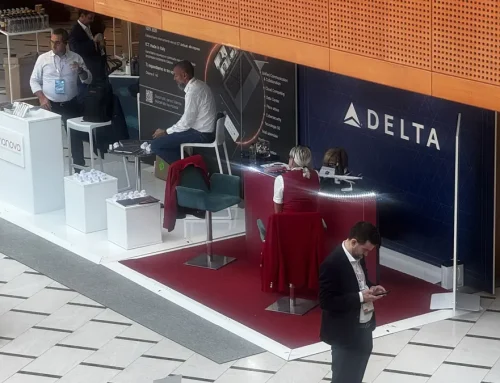
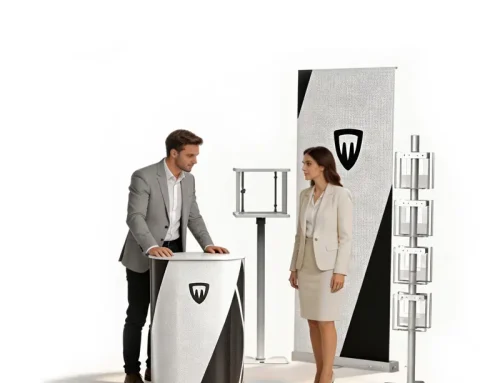
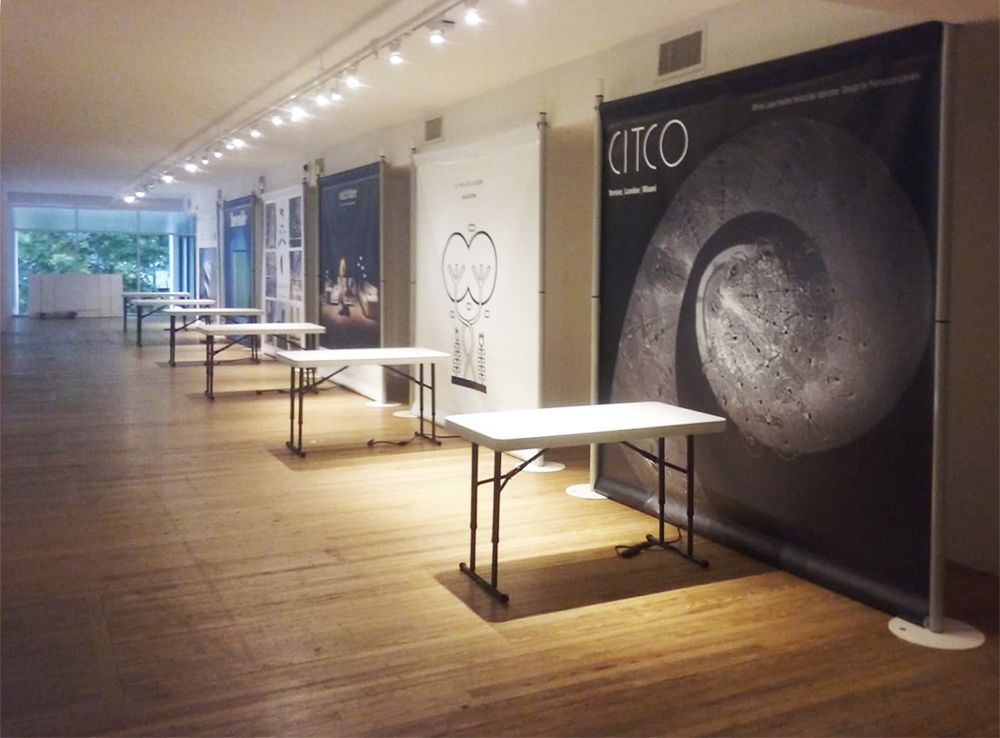
An entire exhibition stand was set up using our portable products. We are proud of how the stand turned out, and the client was impressed by how quickly it was put together and how easy it was to set up.
Could conferences and exhibitions of this kind – that is, highly specialised and sector-specific events – represent the future of trade fair calendars in Italy and around the world?
We certainly believe so, and we are increasingly moving in that direction.
Extract from https://www.expoconsulting.eu/futuro-della-fiera/
The market as it stands
The trade fair sector, like many other areas of corporate promotion, is constantly evolving. Contrary to those who predicted it would be swept away by new technologies and the unifying power of social media and Web 2.0, the 2018 UFI figures tell a different story: €98 billion in spending by exhibitors and visitors, with 1.8 million people employed, including the economic impact of sectors closely linked to the trade fair industry such as catering, hospitality, transport, etc.
Anyone who thought that trade fairs were destined to disappear following the advent of the Internet was very much mistaken. The Internet is not, and cannot be, an alternative to the interaction that takes place at trade fairs. If anything, it is an excellent tool that amplifies and optimises the commercial exchanges initiated at the trade fair. In addition to the web’s viral effect, two elements that are difficult to replicate elsewhere play a decisive role: the high calibre of visitors and the quality of B2B meetings, with the on-site presence of buyers, distributors and international professionals who are highly motivated to experience the “face-to-face interaction”.
A valuable opportunity for SMEs
The past, present and future of the trade fair position it as a booster of vital importance for SMEs (and also for larger, more established companies).
Italy plays a leading role, second in Europe and fourth globally in terms of number of events (around one thousand in 2018 alone).
International trade fairs, moreover, are a key channel for demonstrating the quality and expertise behind our products, even in new and emerging markets, thanks to the opportunity to have direct contact with a company’s history and know-how.
Towards internationalisation
For companies, this means being aware that taking part in a trade fair it no longer simply means ‘to exhibit’. Apart from the long-standing issues posed by costs, ranging from lack of time and staff, which are real obstacles to participation, today requires well-structured preparatory work that begins well in advance and continues beyond the end of the event.
In this era of fierce competition, but also of easier access to and connection with international events, it is becoming increasingly crucial that nothing is left to chance. It is a demanding task which, where companies do not have experts on their staff, requires the assistance of qualified specialists. Their familiarity with the traditional world of trade fairs can thus be combined with new technologies to ensure an effective internationalisation process.
The future of the trade fair
If from one side some major events from the past have lost ground after the years of the economic boom, on the other hand there is growing interest in topics that are increasingly more specific and narrowly defined, linked to new technologies, to sustainability environmental and to innovation.
For an international event to achieve and sustain its success, it must necessarily interpret these trends and know how to reinvent itself, year after year, in order to present the latest developments and new business opportunities in an engaging and forward-looking way to an increasingly discerning and well-informed audience.
The most forward-thinking organisers are familiar with the diversification strategies that have driven companies in recent years and, as a result, design a trade fair based on their changing needs.
New business models are emerging. As is the case in other sectors, innovative concepts are beginning to become the ‘new normal’; companies must therefore keep pace and be prepared to adapt to the inevitable changes; they will need to change their marketing and communication strategies to suit the tastes of a forthcoming, younger generation of visitors who do not have the same brand loyalty as older generations.
Digitalisation, which has now become indispensable, will be key to this process.